A backdoor is putting your real target on the block after the veto competition has already been played, so they never get a chance to win their way off it. Nominate two people nobody wants gone, keep the target out of the veto, let a friendly player win it and use it, then name the target as the replacement — at a point in the week when there is no competition left to save them.
- First run: Big Brother 5, the week of 5–12 August 2004.
- Who ran it: Nakomis, as Head of Household.
- Who it got: Jase, evicted 6–1.
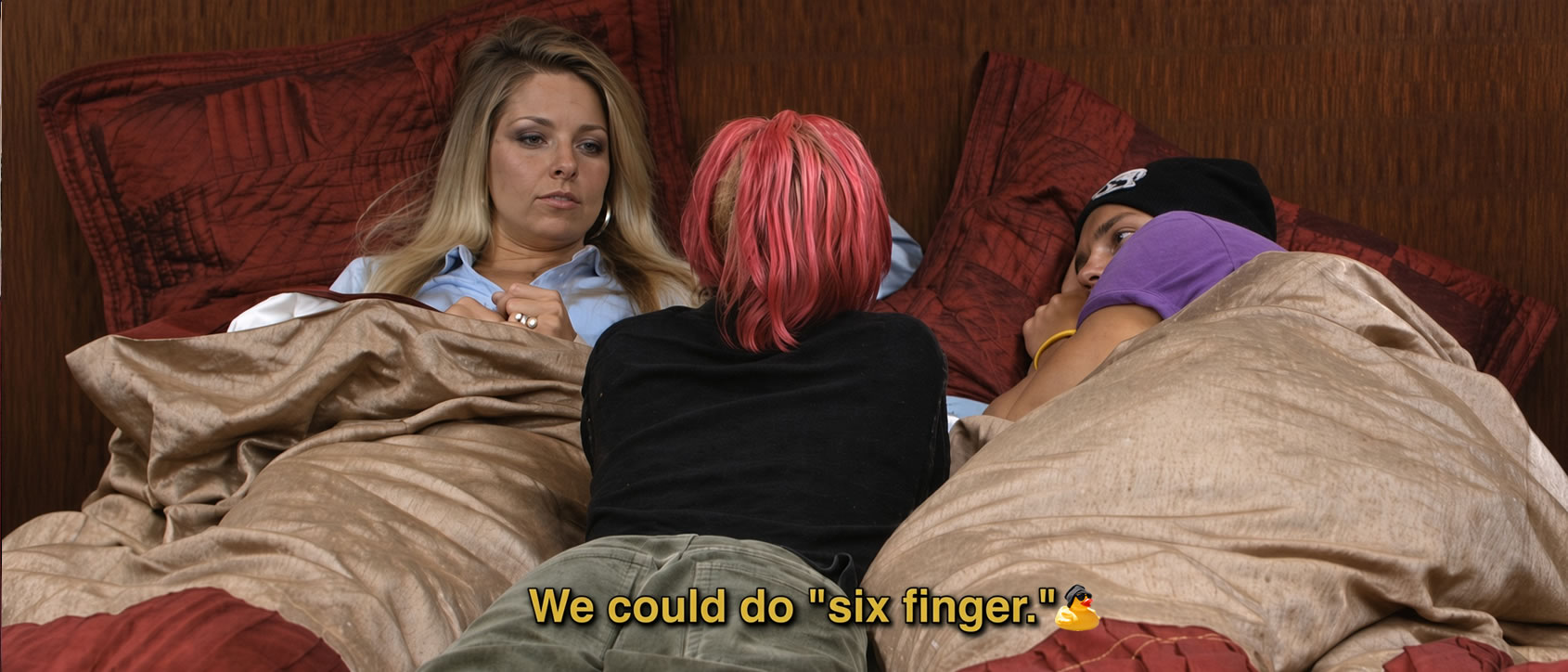
- What the house called it: the Six Finger Plan — six players in the veto competition, all six in on it.
- The word is older than the move: houseguests were saying “backdoor plan” a year before anyone managed to do one.
- Why it works: a player who cannot compete for the veto cannot save themselves.
What counts as a backdoor?
Houseguests use the word loosely. Any blindside, any surprise nomination, anybody walking out of the house without seeing it coming — somebody will call it a backdoor.
The strict version is narrower and it is the one worth keeping. A backdoor is not just a surprise. It is a plan that depends on the target never getting to play for the veto in the first place. If your target sat in that competition and lost, they were not backdoored. They were beaten.
That distinction is the whole reason the move exists. Being on the block early in the week is survivable, because there is still a competition between you and the door. Going up after the veto ceremony is not. The backdoor is the only route to the block with no competition left behind it.
Why does the backdoor work?
Because the week runs in an order that cannot be rearranged. Nominations, then the veto competition, then the veto ceremony, then the vote. The replacement nominee is named at the ceremony — after the last competition of the week has already been won.
So the plan runs backwards. Put up two people the house does not want gone. Keep the target out of the veto field. Have a friendly player win and use the veto on one of your pawns. Name the target as the replacement.
They spend the whole week believing they are safe, and by the time they are not, there is nothing left to win.
The word came before the move
Here is the part nobody tells you: houseguests were talking about backdooring a full year before anyone pulled one off.
In August 2003, in the Big Brother 4 house, Jun explained to Alison what she called a “backdoor plan” — two people go up, somebody wins the veto, one comes down, and Alison goes up in their place and out the door. It is the modern mechanic, described exactly, named, in 2003.
It was also a lie. There was no plan. Jun invented it to make Alison paranoid, and it worked. The first backdoor in Big Brother history was a story somebody made up to frighten another player.
The word was rattling around the house for the rest of that season. One feed watcher covering it live wrote down that the houseguests kept mentioning a backdoor plan and admitted having no idea what they meant by it.
Go back further and the word means something else entirely. In 2002 a “back door deal” in the Big Brother house was just a secret arrangement, ordinary English, nothing to do with nominations. And what we now call a pawn had a different name that summer: the decoy.
The Six Finger Plan: the first real backdoor
Big Brother 5, August 2004. Nakomis won Head of Household on the Thursday, and by that night the plan was already being passed around: put up two of our own, let one come down, put Jase up.
Friday she nominated Diane and Marvin. Both were in on it. The house laughed about it in the kitchen afterwards, because Jase was already gone and did not know.
Saturday the six veto players were chosen, all of them friendly, and Drew won it — which was the one thing that could have broken the plan. Drew was one of Jase’s own alliance. He had been brought inside the plan days earlier, and he spent the weekend being talked through exactly what to do with a veto he was never supposed to win.
Monday he used it. Diane came down, Jase went up, and Jase spent his last four days in the house believing he had got lucky. On Thursday 12 August 2004 he was evicted 6–1.
The house called it the Six Finger Plan, and the name is the cleanest explanation of the move anyone has managed since: six people played in that veto competition and all six of them were in on it. Inside the alliance it had a second name — Operation Jase Erase.
Jase worked it out on the way out. Six people, he said, had needed an elaborate plan to remove him, and that told him what they thought of him as a player.
Five Finger or Six Finger?
Fans have called it the Five Finger Plan for twenty years. It was never that.
Six is what the house said, what the broadcast said and what Jase said. Five comes from a joke name a feed writer coined the following week for a different, abandoned version of the plan, and it stuck harder than the original. If you have only ever heard it called the Five Finger Plan, that is why.
Who invented the backdoor?
Nakomis ran the first one. Whether she thought of it is a harder question, and the honest answer is that the record points in several directions at once.
Diane was voicing the plan on the feeds the night Nakomis won the room. The broadcast edit gave it to Will and Karen, talking it through upstairs. One feed watcher credited Marvin, and later credited Karen. Nakomis claimed it in her goodbye message to Jase, and Julie Chen credited her by name on the finale stage.
And when she did, Nakomis handed the credit straight back:
Usually in society people who get all the credit ride there on the backs of those who helped get them there.
That is probably the truest thing anybody said about it. A plan talked through for days by an alliance, a pawn who volunteered, a rival recruited to hold the veto, and one Head of Household who saw it, ran it and named it. Somebody has to be holding the power for a plan like that to happen, and that week it was her.
Why did nobody do it sooner?
Because until Big Brother 5, it was not possible.
In the first seasons with a veto, the competition was open to the house. Everybody who was not Head of Household could play. There was no way to keep a target out of it, so there was no way to strand them — which is why the 2003 house could describe a backdoor and still never see one.
Big Brother 5 changed the field. Six players: the Head of Household, the two nominees, and one player hand-picked by each of them. For the first time in the show’s history, the people running the week decided who was allowed to compete.
It took the house about five weeks to notice what that meant. The thinking was already visible a week earlier, when Diane nominated Scott alongside Jase specifically so Scott could not win the veto and take Jase off the block — the same instinct, aimed at a nominee instead of a replacement. Jase won that veto himself and saved himself. The Six Finger Plan a week later was the version that closed the gap.
How the move changed
It spread immediately. Six weeks after Jase went out the back door, Karen followed him — backdoored in the same season, out of the same alliance that invented it. By the following summer the word was ordinary house vocabulary and feed watchers were using it before the houseguests did.
Then the rule the whole thing was built on went away. Two seasons after Big Brother 5, the hand-picked field was replaced by a random draw, and the people running the week lost the power to decide who competed.
It did not kill the move. It added luck. Every backdoor since has had the same hole in the middle of it: the draw. You can build the plan, secure the votes and line up the pawns, and then watch your target pull their own name out of the bag and play for their life anyway.
Jase, for what it is worth, was backdoored a second time when he came back for All-Stars. Some players never shake it.
How do you survive a backdoor?
You get in the veto competition. That is the entire defence, and everything else is a way of getting there.
Watch the nominations rather than listening to them. Two pawns going up in a house with an obvious target is the shape of the move, and being told you are safe on a Friday is not information — it is what everybody gets told. If both nominees seem strangely relaxed, that is the plan working.
After that it is the draw, and the draw does not care. Which is the reason a backdoor still fails often enough to be worth watching: the best-laid plan in the house can be undone by a name coming out of a bag.